Prevod
When Saturn’s son, the Father, saw these things from his lofty citadel, he groaned and, recalling the foul banquet at Lycaon’s table— a deed too recent for its infamy to have spread— conceived in his heart a mighty anger worthy of Jove, and summoned a council. Those he called came without delay. There is a road on high, plain to see when the sky is clear: the Milky Way, named for its dazzling whiteness.
By this road the gods pass to the great Thunderer’s palace, his royal home. To right and left, the halls of the nobler gods throng with visitors, their doors thrown open (the lesser gods live scattered elsewhere). Here the mighty and illustrious dwellers in heaven have established their homes. This is the place which, were such boldness of speech allowed, I would not hesitate to call the Palatine of high heaven.
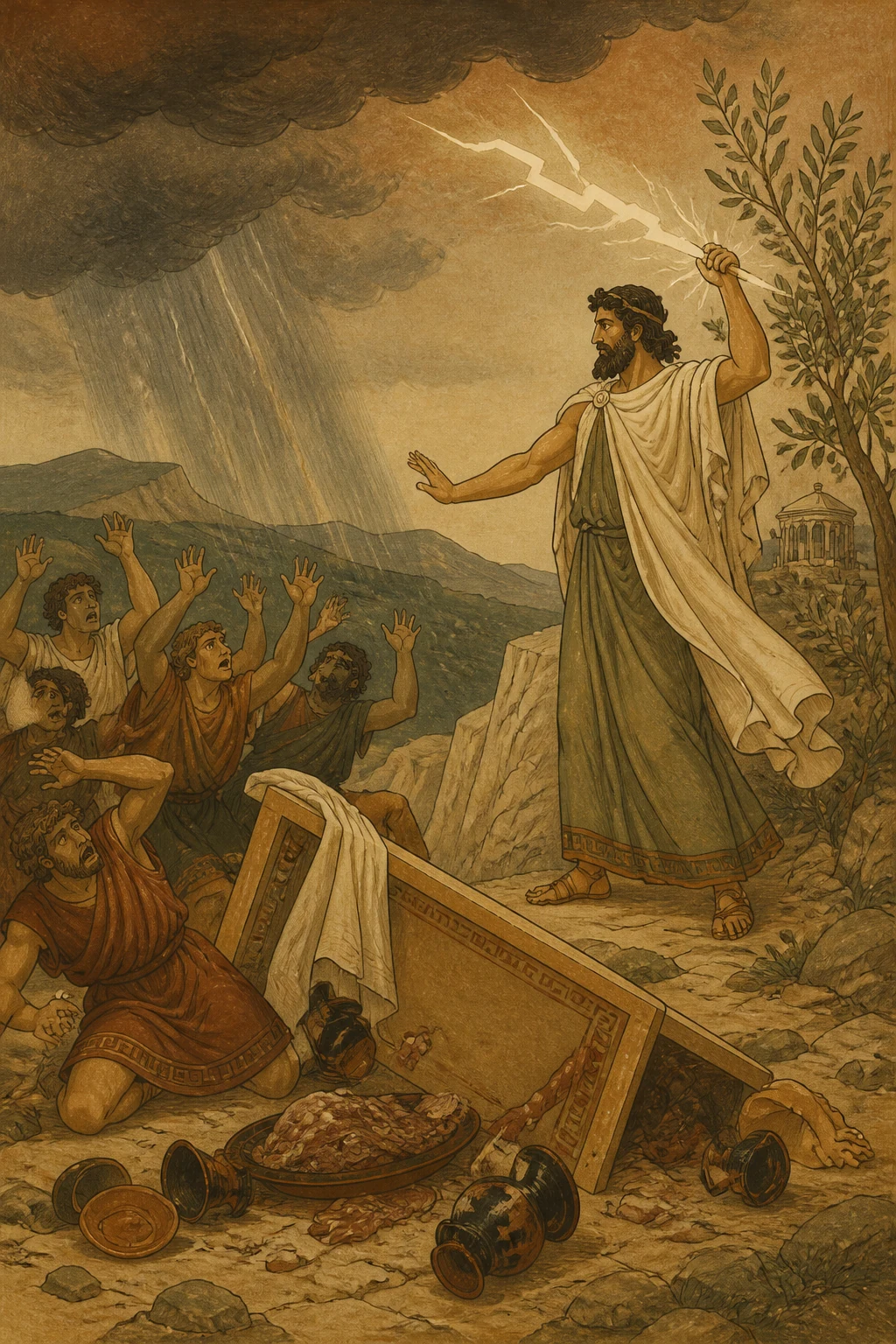
When the gods had taken their seats in the marble chamber, Jove himself, seated above them and leaning on his ivory sceptre, shook the fearsome locks upon his head three times and four, and with them shook the earth, the sea, the stars. Then he opened his indignant lips and spoke: “Never was I more anxious for the sovereignty of the world, even in those days when each of the serpent-footed giants prepared to cast his hundred arms about the heavens and take them captive.
For though the enemy was savage, that war arose from a single body, sprang from a single source. Now, wherever Nereus thunders round the whole earth, I must destroy the mortal race. I swear by the rivers of the underworld, flowing beneath the earth through the Stygian grove! All remedies have been tried first; but flesh beyond healing must be cut away with the sword, lest the sound part be infected.
I have demigods, I have rustic divinities, nymphs and fauns and satyrs and mountain-dwelling woodland gods: since we do not yet deem them worthy of a place in heaven, let us at least allow them to inhabit the earth we have given them. Or do you believe, gods, that they will be safe enough, when against me, who wield the thunderbolt, who hold you all under my rule, Lycaon, notorious for his savagery, has laid a trap?”
All roared aloud, and in their burning zeal demanded punishment for the man who had dared such things. So, when an impious band raged to blot out the Roman name by shedding Caesar’s blood, the human race stood stunned by the terror of so sudden and terrible a downfall, and the whole world shuddered. Nor is your people’s devotion less welcome to you, Augustus, than theirs was to Jove. When, with voice and hand, he had checked their murmuring, they all fell silent.
Once the clamour had subsided beneath their ruler’s majesty, Jupiter broke the silence once more with these words: “He has indeed paid the penalty; set that concern aside. But I shall tell you his crime, and how it was avenged. Reports of this age’s wickedness had reached my ears; wishing them false, I descended from the heights of Olympus and, a god in human guise, travelled through the world.
It would take too long to recount how much evil I found everywhere: the reports themselves fell short of the truth. I had crossed Maenalus, fearsome with its wild beasts’ lairs, and Cyllene and the pine woods of chill Lycaeus. From there I entered the dwelling of the Arcadian tyrant, his inhospitable house, as late twilight drew on the night. I gave a sign that a god had come, and the people began to pray. At first Lycaon mocked their pious vows; then he said, ‘I shall put it to a clear test, whether this is a god or a mortal. The truth will leave no room for doubt.’ He planned to kill me unawares at night, when I was deep in sleep: this was his chosen way to test the truth.
Nor was he content with that: he slit the throat of one of the hostages sent by the Molossian people, then softened some of the still-quivering limbs in boiling water, and roasted others over a fire. No sooner had he set this on the table than I, with avenging flame, brought down the house upon its household gods, worthy of their master. He fled in terror, and when he reached the silent countryside, he howled, trying in vain to speak. His mouth drew savagery from his very nature, and with his old lust for slaughter he turned upon the flocks, delighting in blood even now.
His clothes became shaggy hair, his arms became legs: he became a wolf, yet kept traces of his former shape. The same grey hair, the same ferocity of face, the same gleaming eyes, the same image of savagery remained. One house has fallen. But more than one house deserved to perish: wherever earth extends, fierce Erinys reigns. You would think they had sworn allegiance to crime. Let them all swiftly pay the penalties they have earned: so stands my judgement.”
Some approved Jove’s words aloud, spurring on his anger still further; others played their part with signs of assent. Yet the loss of the human race grieved them all, and they asked what form the earth would take when bereft of mortals, who would bring incense to their altars, and whether he meant to leave the lands for wild beasts to ravage. As they asked such questions, the king of the gods bade them not be afraid, for all else would be his care, and promised a race unlike the former people, born from a wondrous source.