Prevod
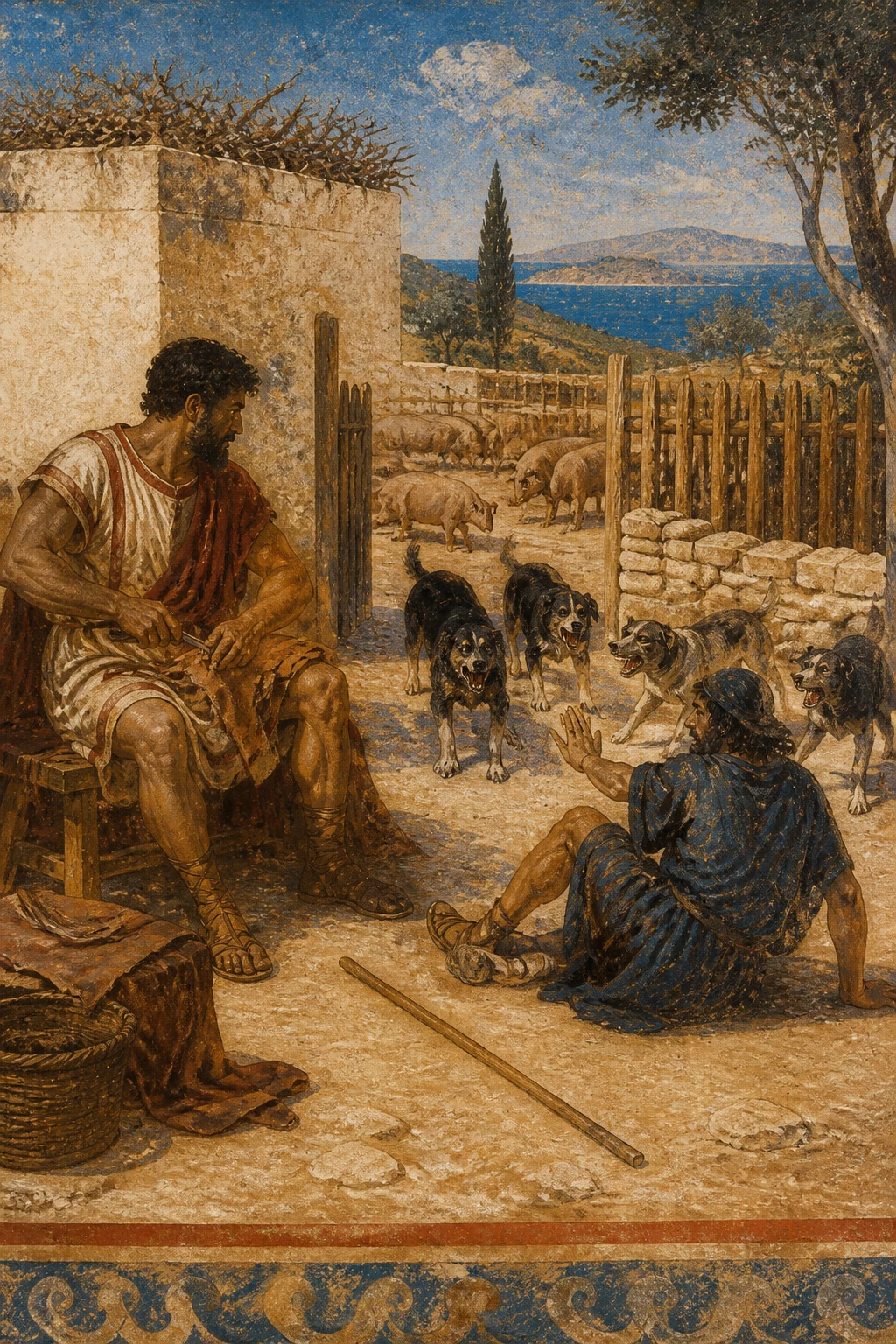
There was once a king who had a very beautiful daughter. Her beauty was famed throughout the world. Kings and emperors came to ask for her hand, or simply to marvel at the sight of her. But her father would give her to no one but a man clever enough to outwit him. A wealthy man in a distant land heard of this and set out on his journey. After passing through many lands and towns, he came one evening to the house of another wealthy man. When he asked whether he might spend the night, his host welcomed him gladly and said that he might—why ever not! The host at once had a sheep slaughtered in his guest’s honour, and when it was served for supper, they set aside the head for the shepherd, who was up in the mountains with the flock. At daybreak the next morning, the traveller went on his way to ask the king for his daughter’s hand. As he passed through the mountains, he came upon the shepherd from the house where he had spent the night. Greeting him with “God be with you,” he said, “You tend your flock well!” The shepherd answered, “I tend them so they may feed their fill.” The traveller went on, “I spent last night at your house.” And the shepherd replied, “So you did; your road brought you there.” Then the traveller said, “When I came to your house, they slaughtered a sheep for me.” And the shepherd said, “When guests come, meat must be slaughtered for them.” Again the traveller said, “We saved the head for you.” And the shepherd said, “One head deserves another.” Again the traveller said, “The household put it on a shelf, but the bitch came and ate it.” And the shepherd said, “Then it was meant for her.” The traveller went on, “Your father came and killed the bitch.” And the shepherd said, “If they killed her, she deserved it.” Again the traveller said, “After they killed her, they threw her on the dung heap.” And the shepherd said, “If they threw her on the dung heap, that was where she used to lie when she was alive.” Hearing the shepherd answer everything so readily, the traveller was greatly astonished. He thought to himself that this fellow would be a good man to plead his suit for the king’s daughter, and said, “In good faith, come a little closer, so we may talk some more.” The shepherd answered, “Wait a moment while I turn the sheep back.” He ran off, turned the sheep back, and came over to the man, who said, “I am on my way to such-and-such a king to ask for his daughter’s hand, but he will give her to no one but a man clever enough to outwit him. Now I see that you are quick-witted and know how to speak wisely and well. Would you come with me to this king, and perhaps win the girl for me?” The shepherd replied, “I will.” So they set off together and came to the town where the king lived. When they reached the king’s gates, the guards stopped them and asked, “Where are you going?” They told the guards, “We are going to the king to ask for his daughter’s hand.” And the guards answered, “Anyone who comes to ask for the girl’s hand is free to enter.” So they let them through. When they went upstairs into the king’s presence, the wealthy man spoke: “God be with you, our illustrious king!” The king returned his greeting: “May God grant you good fortune, my children!” Then he asked the wealthy man, “What has that Vlach in coarse clothes come for?” But the shepherd did not let the man answer. He spoke up himself and said, “Though I may be a Vlach in coarse clothes, I have more wealth than those in fine clothes, and three thousand sheep besides. I milk them in one deep valley, make cheese in another, and store my dairy produce in a third.” Then the king said, “That is good, to have such wealth.” But the shepherd replied, “It is not good, but bad.” The king said, “How can it be bad, when you tell me of such good fortune?” Then the shepherd answered, “Well, all my dairy produce spoiled and turned to manure.” The king said, “What a pity! Such a loss!” But the shepherd replied, “That was no misfortune for me, but good luck.” The king said, “How so, fellow?” Then the shepherd answered, “I took a plough and oxen, ploughed three hundred days’ worth of land, and sowed it all with wheat.” The king said, “That is good, to have sown so much wheat.” But the shepherd replied, “By my faith, it was not good, but bad.” The king said, “Why, poor fellow?” The shepherd answered, “That wheat of mine changed: beeches and firs sprang up everywhere.” Then the king said, “Oh, what a loss that must have been!” But the shepherd replied, “It was no loss to me, but a gain.” The king said, “How could it be a gain, when so much of your wheat was transformed?” The shepherd answered, “Because a swarm of bees flew down and covered all those beeches and firs, till neither branch nor root could be seen.” Then the emperor said, “That is good, to have so many bees come to you.” But the shepherd replied, “By my faith, it was not good, but bad.” Again the emperor asked, “Why, fellow?” And the shepherd answered, “The fierce sun at St Elijah’s Day beat down, and all the honeycomb and honey melted and spilled over the whole valley.” Then the king said, “By my faith, that was bad indeed.” But the shepherd replied, “By my faith, it was not bad, but good.” Again the king asked, “How so, fellow?” And the shepherd answered, “I caught a flea and killed it, then made a sack of its skin and filled it with three hundred pack-loads.” Then the king said, “By my faith, that is an outright lie!” And the shepherd answered, “If it is a lie, you have believed it to be true. I have outwitted you well enough, so give me the girl: I have earned her.” The emperor had no way out, so he gave the girl to the shepherd, and the shepherd gave her to the wealthy man, and the wealthy man gave the shepherd riches beyond counting.