Waltey
Kako je mož z vzhoda odpravil človeško žrtvovanje
Uji Shūi Monogatari · anonimna srednjeveška zbirkaO besedilu
Kako je mož z vzhoda odpravil človeško žrtvovanje
- Vir
- Uji Shūi Monogatari
- Avtor
- anonimna srednjeveška zbirka
- Jezik branja
- English
- Jezik izvirnika
- 日本語
- Čas branja
- 11 min branja
- Obseg
- 9 strani
- Naslov izvirnika
- 119 吾嬬人止生贄事
O izvirniku
Uji Shūi Monogatari
Srednjeveške japonske pripovedi o menihih, duhovih, čudežih, prevarah in vsakdanjih presenečenjih. Bralni jezik je English, izvirnik pa prihaja iz vira Uji Shūi Monogatari v jeziku 日本語.
Besedilo
Kako je mož z vzhoda odpravil človeško žrtvovanje
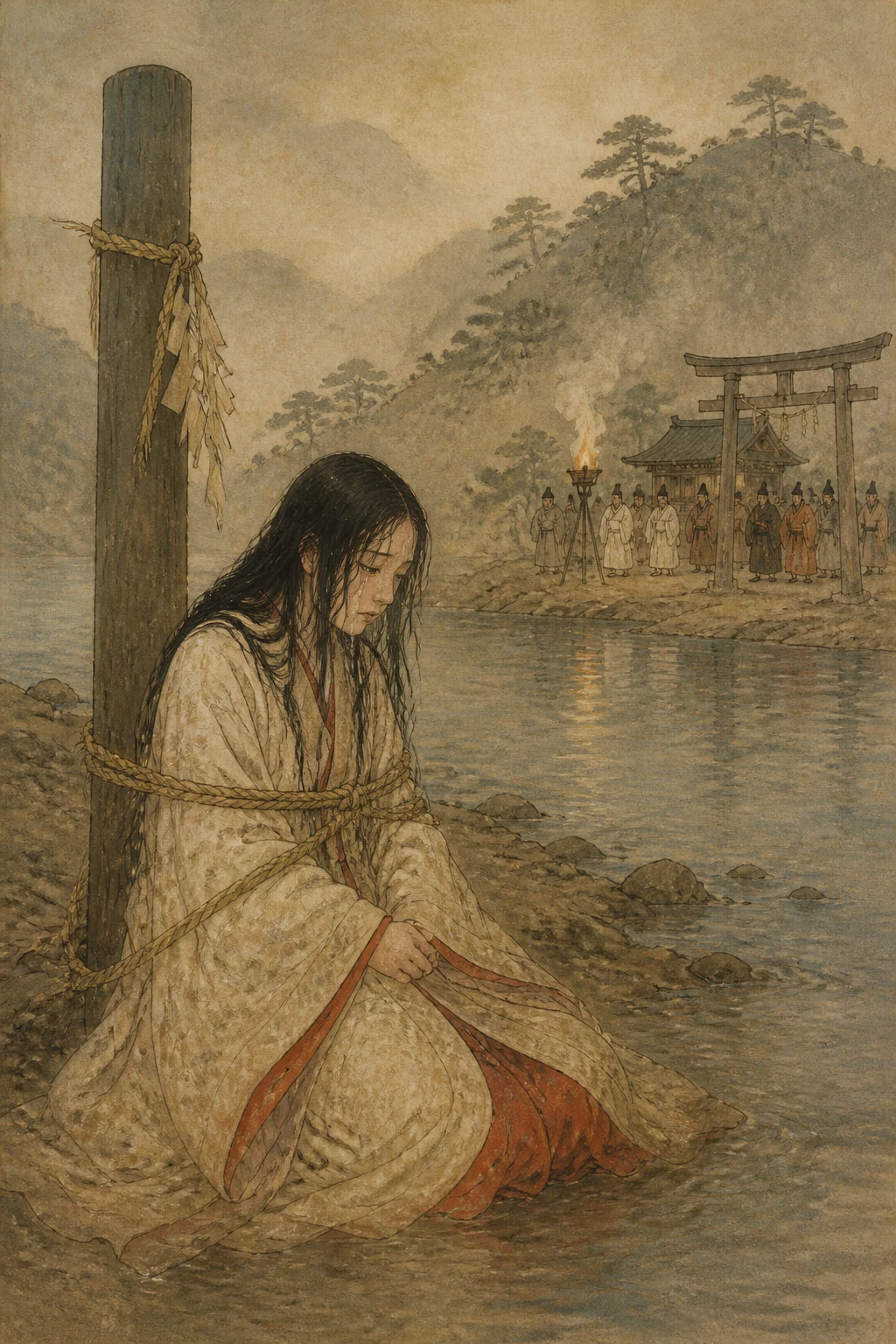
Long ago, in the province of Mimasaka on the San’yō Road, there were gods called Chūsan and Kōya. Kōya was a serpent, and Chūsan a monkey. Every year at their festival, a human sacrifice was unfailingly offered. A daughter of some household would be sought out and chosen—a girl with a lovely face, long hair, fair skin, a graceful figure, and a sweet, charming manner—and presented to the gods. From ancient times down to the time of this tale, the observance had never been neglected. Now a certain man’s daughter was chosen as the sacrifice. Her parents’ grief and lamentation knew no bounds. The bond between parent and child is formed by a pledge made in a former life: even a child of little merit cannot be lightly regarded. How much more, then, must they cherish a daughter admirable in every way, dearer to them than their own lives. Yet there was no escaping what had been decreed, and so they passed their days and months in sorrow. As her remaining life grew steadily shorter, the thought that little time was left for them to be together as parents and child made them count the days, weeping aloud from morning until night. At this time there happened to come into the district a man from the eastern provinces whose sole occupation was hunting. An enraged wild boar is a truly terrifying creature, yet this man thought nothing even of that: he killed and caught such beasts at will and made his living by eating them. He was a rough warrior, prodigiously strong, fierce of heart, and fearsome to look upon. In the course of his wanderings through the neighborhood, he came to the home of the girl’s parents. As they talked, her father said, “I have only one daughter, and she has been chosen as the sacrifice for such-and-such a god. We spend our days brooding and our nights lamenting. To think that such things should happen in this world! What sins can I have committed in a former life, to have been born in this province and made to suffer so? The girl herself says, ‘Against my will, I must die this dreadful death!’ It is heartrending beyond words. And though I am her father and should not say so, she is an extraordinarily lovely child.” The man from the east replied, “Then she is someone who is already doomed to die. Nothing is more precious to a person than life. It is only because we fear for ourselves that we fear the gods. Do not give them their sacrifice this time. Entrust your daughter to me. If she should die, the outcome would be no different. How could you bear to watch your only daughter cut apart before your eyes, sliced into strips while she is still alive? It would be a dreadful thing. Since the worst that could happen is no worse than what awaits her now, simply entrust her to me.” He urged this so earnestly that the father thought, “Indeed, better that than to watch her die horribly before my eyes,” and gave the girl into his care. The man from the east went to see her. He found her lovely in face and figure, and wonderfully engaging. Lost in sorrow, she lay leaning against a support, practicing her writing, while tears fell upon her sleeves and soaked them. Hearing someone approach, she shook her hair forward to hide her face. He saw that her hair, too, was wet, and her face washed with tears. Deeply absorbed in grief, she seemed all the more shy at his arrival, and turned a little away. There was something truly tender and lovely about her. Her whole bearing was so noble, so refined and graceful, that one would never have taken her for the daughter of country folk. At the sight of her, the man’s pity was beyond words. “Whatever comes of it,” he thought, “even if I must lose my life, I will take her place.” He said to her parents, “There is something I am planning. If you should be brought to ruin on this young lady’s account, would you regret it?” They answered, “If we ourselves must perish for her sake, let us perish. We would not regret it in the least. What would be the use of living on? Do whatever you think best.” “Then,” he said, “put up a screen on all four sides, saying that she is undergoing purification for the festival. Whatever happens, let no one come near. And above all, let no one know that I am here.” He remained shut away there for some days, and he and the girl grew deeply devoted to one another. Now among the dogs he had trained for years to hunt in the mountains, he chose two of the fiercest and cleverest. He caught live monkeys and, morning and evening, urged the dogs to seize and kill them, training them to do so. Dogs and monkeys are enemies by nature; with this constant schooling, the dogs would leap at any monkey they saw and tear it to death with boundless fury. Morning and evening, too, he polished his keen sword, honed his knives, and prepared his blades. All the while he would say to the young lady, “Ah, what bond can we have formed in a former life, that I should now be about to give my life in place of yours? Yet when I think that it is for you, I have not the slightest regret at losing it. Only the thought of parting from you fills me with desolation and sorrow.” And she, moved by his words, would say, “Who can you be, that you should have come here and shown me such devotion?” Their love and sorrow were exceedingly deep. So the days passed, until the day of the festival arrived. The shrine officials and a great crowd of others assembled and came clamoring to fetch the girl. They pushed a new, long chest into the place where she was staying and said, “As usual, put the sacrifice in this and bring it out.” The man from the east said, “For this one occasion, do exactly as I tell you.” He secretly lay down in the chest, taking the dogs in beside him, one on either side. “You two,” he told them, “now repay the care I have given you all these days. Save my life this time!” As he stroked them, they gave low growls and lay close against his sides. He also took into the chest all the swords and knives he had spent those days sharpening and polishing. Then the lid was put on, the chest wrapped in cloth, bound, and sealed. Believing that the daughter had been placed inside, the people brought it out. Spears and sacred sakaki branches were brandished, bells rung and mirrors shaken, and the procession bore it away amid a tremendous clamor. When the girl heard them, she thought, “How deeply moving, that this man should have gone like this in my place!” Yet she also lamented, “If all does not go well and trouble follows, what will become of my parents?” She sat grieving over one fear after another. But her parents said, “It is only for our own sakes that we fear gods and buddhas. Since you were to die, there is nothing left for us to fear. We would lose you just the same. If we perish now, it will be no matter.” Meanwhile the sacrifice was carried to the shrine. The chief priest solemnly recited the sacred prayers, opened the doors before the god, and had the long chest brought inside. The doors were then shut as before, and outside them the shrine officials and the other functionaries took their seats, each in his appointed order. The man from the east secretly pierced a hole in the chest with the tip of his knife and peered out. There sat a monkey of indescribable size, some seven or eight feet tall, in the place of honor. Its face and rump were red, and its pure white fur stood out so thickly that it seemed to be dressed in teased cotton. Some two hundred lesser monkeys sat in rows to its right and left, reddening their faces, raising their brows, and shrieking and chattering in every manner of voice. On an enormous chopping board lay a long carving knife. All around stood numerous jars, apparently containing vinegar, rice wine, and salt. After a little while, the great monkey rose from its seat of honor, approached the chest, and began to undo the cords and open the lid. The other monkeys were all drawing near when the man cried, “Seize them, you dogs!” The two dogs sprang out, fastened upon the largest monkey in their midst, and threw it down. As they stretched it between them, ready to tear it to death, the man leaped out of the chest with his hair flying loose. Drawing a blade that gleamed like ice, he dragged the monkey onto the chopping board, set the knife against its neck, and said, “So! This is what becomes of a creature that takes human lives and eats human flesh. Listen well, all of you! I shall cut this fellow’s head off and feed him to my dogs.” The monkey’s face flushed red. It blinked its eyes and bared its white teeth, while bloody tears streamed down its cheeks. With a truly pitiful expression, it rubbed its hands together and pleaded for mercy, but the man would not relent. “For all these many years you have eaten people’s children and cut off their family lines. In return, I am going to cut off your head and throw it away this very instant. If you can, kill me instead! I care nothing for it!” Yet for all his words, he did not immediately sever its neck. Meanwhile the two dogs chased the other monkeys, which fled up into the trees in confusion, shrieking and clamoring so loudly that the mountains echoed and the earth itself seemed about to overturn. Then the god possessed one of the priests and spoke through him: “From this day forward, I shall never, never again require this sacrifice. I renounce it forever. I have learned my lesson—indeed I have! Never again shall I take a human life. Nor, because this man has treated me so, shall I do him any harm, or afflict or trouble the family of the person chosen as today’s sacrifice. In atonement, I shall protect them, down to the last of their descendants. Only hurry, hurry, and plead for my life this once! I am in agony! Save me!” At these words, the shrine officials, the priests, and all the assembled people started up in astonishment. They rushed into the sanctuary in a panic, rubbing their hands together in supplication. “You are quite right—of course you are!” they said. “But please forgive the god. The god, too, has spoken most properly.” Yet the man from the east replied, “Do not be taken in like that. This creature cuts short people’s lives and kills them. I mean to teach him what suffering is. Here I am: let him kill me! I care nothing for it!” He would not release the monkey. When it seemed that its neck was about to be severed, the shrine officials wrung their hands, at a loss what to do. They offered solemn oaths and pleaded with him, and the god, too, promised never, never to do such a thing again. At last the man said, “Very well, then, very well. But never do this again!” Having impressed this upon it, he let it go. From that time onward, human beings were no longer offered in sacrifice. The man returned to the house, where he and the girl loved one another dearly, became husband and wife, and lived together for many years. He was, in fact, descended from a family of some standing, and so they lived in respectable circumstances. Thereafter, it is said, boars and deer were offered as sacrifices in that province.
Izvirnik
119 吾嬬人止生贄事
Naslednje strani prikazujejo izvirno besedilo za primerjavo.
今は昔山陽道美作国に中さんかうやと申神おはしますかうやはくちなわ中さむは猿丸にてなんおはするその神年ことの祭にかならすいけにゑをたてまつる人のむすめのかたちよくかみなかく色しろく身なりおかしけにすかたらうたけなるをそえらひもとめてたてまつりける昔より今にいたるまてその祭おこたり侍らすそれにある人の女いけにゑにさしあてられにけり
おやともなきかなしむ事かきりなし人のおや子となる事はさきの世の契なりけれはあやしきをたにもおろかにやは思ふましてよろつにめてたけれは身にもまさりておろかならす思へともさりとてのかるへからねはなけきなから月日を過す程にやうやう命つつまるをおや子と逢みん事いまいくはくならすと思ふにつけて日をかそへて明暮たたねをのみなくかかる程にあつまの人の狩といふことのみやくとして猪のししといふ物の腹立しかりたるはいとおそろしき物なりそれをたに何とも思たらす心にまかせてころしとりくふ事を役とするもののいみしう身の力つよく心たけうむくつけきあら武者のをのつからいてきてそのわたりにうちめくる程にこの女の父母のもとにきにけり物かたりするつゐてに女の父のいふやうをのれかむすめのたた独侍をなんかうかうのいけにゑにさしあてられ侍れは思くらしなけきあかして
なん月日をすくし侍る世にはかかる事も侍けりさきの世にいかなる罪をつくりてこの国にむまれてかかる目をみ侍るらんかの女こも心にもあらすあさましき死をし侍りなんするかなと申いとあはれにかなしう侍なりさるはをのれか女とも申さしいみしううつくしけに侍なりといへはあつまの人さてその人は今は死給ひなんする人にこそはおはすなれ人は命にまさる事なし身のためにこそ神もおそろしけれこのたひのいけにゑを出さすしてその女君をみつからにあつけたふへし死給はんもおなしことにこそおはすれいかてかたたひとりもちたてまつり給へらん御女を目のまへにいきなからなますにつくり切ひろけさせては見給はんゆゆしかるへき事也さるめみたまはんもおなし事也たたその君を我にあつけ給へとねん比にいひけれはけにまへにゆゆしきさまにてしなんをみんよりはとてとらせつかくてあつま人この
女のもとに行てみれはかたちすかたおかしけなりあひきやうめてたし物思たる姿にてよりふして手習をするに涙の袖のうへにかかりてぬれたりかかる程に人のけはひのすれは髪をかほにふりかくるをみれは髪もぬれかほも涙にあらはれて思いりたるさまなるに人のきたれはいととつつましけに思たるけはひしてすこしそはむきたる姿まことにらうたけなり凡けたかくしなしなしうおかしけなる事ゐ中人の子といふへからすあつま人これをみるにかなしき事いはんかたなしされはいかにもいかにも我身なくはならはなれたたこれにかはりなんと思て此女の父母にいふやう思かまふる事こそ侍れもし此君の御事によりてほろひなとし給ははくるしとやおほさるへきと問へはこのためにみつからはいたつらにもならはなれ更にくるしからすいきてもなににかはし侍らんするたたおほされんままにいかにもいかにもし給へといらふれはさらは此御祭の御きよめ
するなりとて四目引めくらしていかにもいかにも人なよせ給そまたこれにみつから侍るとな人にゆめゆめしらせ給そといふさて日比こもりゐて此女房とおもひすむ事いみしかかる程にとしころ山につかひならはしたる犬のいみしきなかにかしこきをふたつえりてそれにいきたる猿丸をとらへて明くれはやくやくと食ころさせてならはすさらぬたに猿と犬とはかたきなるにいとかうのみならはせは猿をみてはおとりかかりてくひころす事かきりなしさて明暮はいらなき太刀をみかき刀をとき釼をまうけつつたたこのめの君とことくさにするやうあはれ先の世にいかなる契をして御命にかはりていたつらになり侍りなんとすらんされと御かはりと思へは命は更におしからすたた別きこえなんすとおもひ給ふるかいと心ほそくあはれなるなといへは女もまことにいかなる人のかくおはして思ものし給にかといひつつけられてかなしうあはれなる
事いみしさて過行程にその祭の日になりて宮つかさよりはしめよろつの人々こそりあつまりて迎にののしりきてあたらしき長櫃をこの女のゐたる所にさし入ていふやう例のやうにこれに入てその生贄いたされよといへはこのあつま人たた此のたひの事はみつからの申さんままにし給へとて此櫃にみそかに入ふして左右のそはにこの犬ともをとりいれていふやうをのれらこの日比いたはりかひつるかひありて此たひのわか命にかはれをのれらよといひてかきなつれはうちうめきて脇にかひそひてみなふしぬ又日比ときみかきつる太刀刀みなとりいれつさて櫃のふたをおほひて布してゆひて封つけてわかむすめを入たるやうに思はせてさし出したれは桙榊鈴鏡をふりあはせてさきをひののしりてもてまいるさまいといみしさて女是をきくに我にかはりてこの男のかくしていぬるこそいと
あはれなれとおもふに又無為にこといてこはわかおやたちいかにおはせんとかたかたになけきゐたりされとも父母のいふやうは身のためにこそ神も仏もおそろしけれしぬる君の事なれは今はおそろしき事もなしおなしことをかくてをなくなりなん今はほろひんもくるしからすといひゐたりかくていけにゑを御社にもてまいり神主のといみしく申て神の御まへの戸をあけてこの長櫃をさし入て戸をもとのやうにさしてそれより外のかたに宮つかさをはしめて次々の司とも次第にみなならひゐたりさる程にこの櫃を刀のさきしてみそかに穴をあけてあつま人みけれはまことにえもいはす大きなる猿のたけ七八尺はかりなるかほとしりとはあかくしてむしり綿をきたるやうにいらなくしろきか毛はおひあかりたるさまにてよこ座により居たりつきつきの猿とも左右に二百斗なみゐてさまさまにかほをあかくなし眉を
あけこゑこゑになきさけひののしるいと大なるまないたになかやかなる包丁刀をくして置たりめくりにはす酒しほ入たる瓶ともなめりとみゆるあまた置たりさてしはしはかりあるほとにこの横座に居たるをけ猿よりきて長櫃のゆひををときてふたをあけんとすれは次々のさるともみなよらんとする程に此男犬ともくらへをのれといへは二の犬おとりいててなかに大なる猿をくひてうちふせてひきはりて食ころさんとする程に此男髪をみたりて櫃よりおとりいてて氷のやうなる刀をぬきてそのさるをまな板の上にひきふせてくひにかたなをあてていふやうわおのれか人の命をたちそのししむらを食なとする物はかくそあるをのれらうけ給はれたしかにしやくひ切て犬にかひてんといへはかほをあかくなして目をしはたたきて歯をましろにくひ出して目より血の泪をなかしてまことにあさましきかほつきして手をすりかなし
めともさらにゆるさすしてをのれかそこはくのおほくの年比人の子ともをくひ人のたねをたつかはりにしや頭きりてすてん事たた今にこそあめれをのれか身さらは我をころせ更にくるしからすといひなからさすかにくひをはとみにきりやらすさる程にこの二の犬ともにおはれておほくの猿ともみな木のうへに逃のほりまとひさはきさけひののしるに山もひひきて地もかへりぬへしかかる程に一人の神主に神つきていふやうけふより後さらにさらにこの生贄をせしなかくととめてん人をころす事こりともこりぬ命をたつこと今よりなかくし侍らし又我をかくしつとてこの男とかくし又けふの生贄にあたりつる人のゆかりをれうしわつらはすへからすあやまりてその人の子孫のすゑすゑにいたるまて我まもりとならんたたとくとく此たひのわか命をこひうけよいとかなし我をたすけよとのたまへは宮司神主より初て
おほくの人ともおとろきをなしてみな社の内に入たちてさはきあはてて手をすりてことはりおのつからさそ侍るたた御神にゆるし給へ御神もよくそ仰らるるといへるもこのあつま人さなすかされそ人の命をたちころす物なれはきやつにもののわひしさしらせんとおもふなり我身こそあなれたたころされんくるしからすといひて更にゆるさすかかる程に此猿のくひはきりはなされぬと見ゆれは宮つかさも手まとひしてまことにすへきかたなけれはいみしきちかことともをたてて祈申て今より後はかかる事更に更にすへからすなと神もいへはさらはよしよし今より後はかかる事なせそといひふくめてゆるしつさてそれよりのちはすへて人をいけにゑにせすなりにけりさてその男家に帰ていみしう男女あひ思て年比の妻夫に成てすくしけり男はもとよりゆへありける人のすゑなりけれはくちおしからぬさまにて侍りけりその後はかの
国に猪鹿をなん生贄にし侍りけるとそ
Nadaljuj z branjem